In the midst of thoughts about Nativity, I’ve been giving a little thought to the kind of costumes we wear and why what they might represent to other people. In part it’s been prompted but something that the moderator of the General Assembly of the Church of Scotland had suggested for ministers to be doing in the week before Christmas, in part it’s because a squadron of angels, shepherds, wise men, and animals lay claim to the sanctuary, and in part because I’m thinking about how children relate to adults around the church and recognise who they are when they have been told that these are the people who are responsible for them.
So what did the Moderator say? His suggestion had been at in the week before Christmas all ministers should be donning their clerical collars in the hope that it will encourage conversations. Now I don’t have a problem with wearing a collar. Having worked prior to ministry in an organisation that required a uniform, for me the clothing of ministry is a uniform and in specific places for some those clothes offer the comfort and assurance that someone might know what they are doing in relating to God. However I do not feel any the less of a minister on the days that I choose to wear ordinary clothes. There is a running joke in our home that there is no problem for people deciding to speak to me, as I seem to attract all kinds of people who even without knowing what I normally do decide to have a conversation with me. Regularly a at bus stops and train stations I can find myself drawn into conversations with people I’ve never met before.
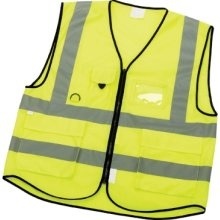
I do think that occasionally clothes are important. As a child growing up in a congregation where the elders wore the obvious sign of Morning Suit, it was comforting to know that should you get lost in the large building that one of them suits would know where your dad might be. In today’s world of need for protection of children, and ensuring that they are safely transferred between buildings perhaps we as a church need to recognise hat a yellow vest can be as much a sign of who to trust as a Morning suit was to an earlier generation.
Of course some might see this as being over-zealous or a doing down of the role of elder, but when it comes to the vulnerable of our communities, there is a clear Gospel principle that the lost and the least should be our akin priority.
 Beachblesser's Blog
I think the elders, and non elders who have roles within a congregation, should have some means of visible identification. My first thought was of a name badge, but that might look a bit corporate. Is corporate a bad thing? Corporations are certainly good at building distinctive brands.
I don’t think this is knocking the role of the elder, in fact it might make elders more obvious to those visiting a congregation. Surely by making the elders more visible,it promotes their role while also letting vulnerable and lost know who they can approach.
From experience in a pervious life…sometimes people don’t see people in hi-vis vests. Really, the number of highly secure places I pretty much walked into wearing one is scary. People assume they should be there. I’ve even heard of photographers who wear them as they can ‘blend in’.
The yellow ones are so common cyclists, joggers and bikers wear them. And, unfortunately, they are beginning to blend into the background. The orange ones aren’t as common…yet (except among militant train spotters…a terrifying group!).
Ah Mrs Gerbil! I’m not thinking about “people” in general for I would agree with you. I’m thinking about those who don’t necessarily see faces and who know they are being put in the charge of some others. A good number if them can’t read badges. How does the church find a way of ensuring that that group knows who to look to for help? I’d love to be able to say they shouldn’t need a visible sign because all could help, but God’s kingdom is still at work and we are not there yet.